

This is the second part of a series on the Writer’s High. In Part One, “When the Abuelos Leave the Room,” I wrote about Flow, the state where the critical mind steps aside and the writing seems to write itself. If you haven’t read it, start [here]. In this post, I go somewhere else: the strange, image-filled moments just before sleep.
Flow is great, I would even say necessary, but it’s only one manifestation of the Writer’s High and it can optimize everything from the first draft to the editing draft, when you completely focus on what you have already written, going over every word, deciding between syntactical options, sometimes reading it aloud and even pondering for hours over whether a comma is needed or if the semicolon helps or impedes the rhythm. Writers are obsessed with perfection, and they can spend a lot of Flow time as editors. And because certain platonic worlds are available during Flow, the experience can even be “spiritual” in that you can interact with other thought beings who have entered the same configurations or realms.
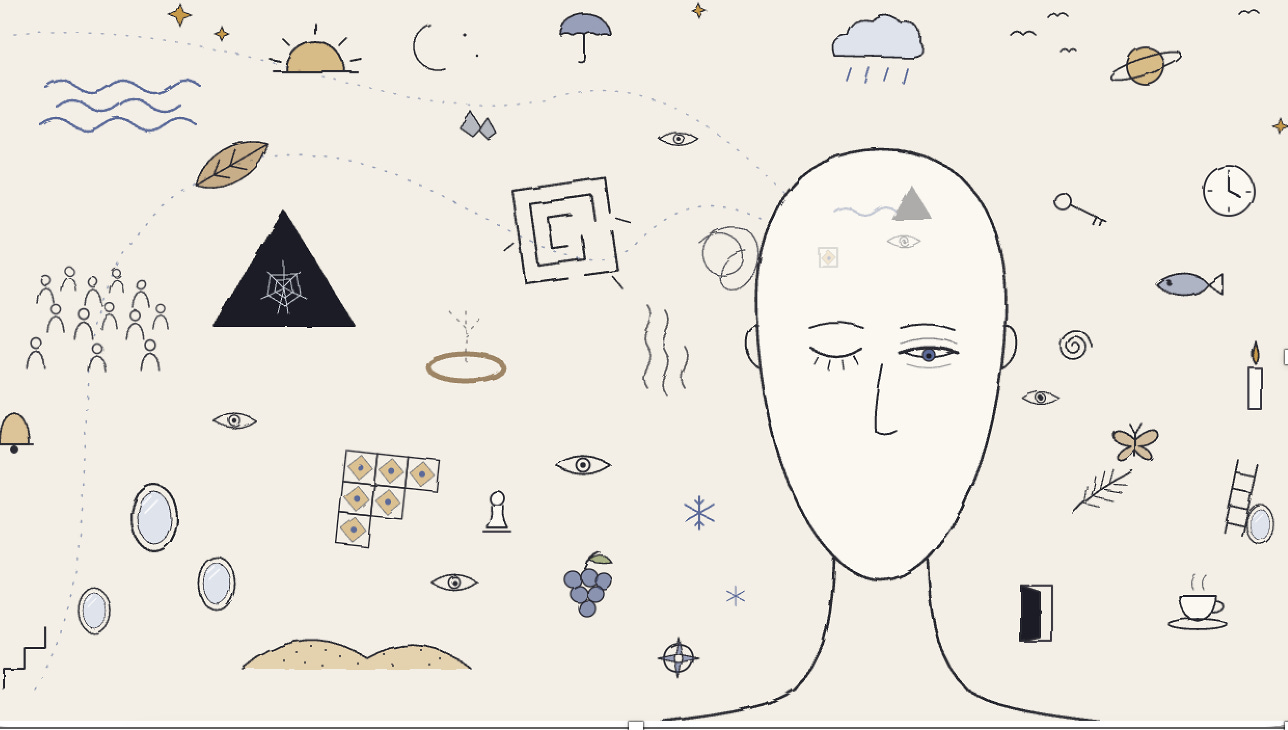
Kafka is known as a great writer, not because he was a great writer, but because so many great writers while reading him have entered into his imaginary world. If you read his writing in the state of Flow, you encounter other readers who have entered the same landscape, like Borges. He spent a lot of time in Kafka’s world, and because that landscape is outside of space-time, it is chronologically nonlinear. He’s there now, and if you have lingered in Kafka’s landscapes, you are too. You can nod to Borges and other great writers who have entered that world, like García Márquez, Murakami, and Clarice Lispector. They are there now, and so are you, so together you can witness a man walking up hill to a Castle he will never reach and get a glimpse the castles you have foolishly strived to find. Kafka’s work is deepened with every generation, which makes him more of a genius now than when he was alive.
A writer needs Flow, but if we want to go deeper into the multiverse[1], we must allow another state of consciousness to expand our imaginations. It’s called Hypnagogia. This mindset leads creators–poets, artists, musicians– into the depths of self. As Shakespeare famously wrote, I could be bounded in a nutshell and count myself a king of infinite space were it not that I have bad dreams.
Everything you need to see the Face of God (whatever that may mean to you) is inside of you. Mystics and philosophers have told us this throughout intellectual history. Know thyself. Physiologically this means to see truth you need access to your non accessible memories, to past thoughts you have forgotten, images that you have seen from the time you were able to open your eyes and see your mother’s face looking down on you to the print on this page. Plato says, Memory is learning.
It’s more than that. Memory is your connection to the universe of infinite possibility.
In Flow, you lose the connection with your prefrontal cortex and limbic system, your amygdala and maybe your hippocampus, emotion and memory, so you lose your story, your ego, which is good for math. But poetry can be emotionally charged and deeply personal. In Flow, you don’t drag your fears and memories into those landscapes.
A poet needs to enter self, our feelings, our identity, who we are, and for a fiction writer to endow our characters with life, with spirit, we need to breathe our own experience into them.
Poets and mystics need to embrace the state of Hypnagogia.
The world’s greatest mystics did their best work or conceived of their most amazing and world-changing ideas in the hypnagogic state.
What Is Hypnagogia?
This is the time when you’re lying in bed right before sleep, and images pop in your head, images disconnected from a coherent narrative, just seemingly random images pop in your head, a street corner, a shoulder of a lady walking into a store, a cement square where a tree used to be.
These images pop into your head, and because you are about to fall asleep, your prefrontal cortex diminishes but your amygdala, the emotional center, and the hippocampus, where you store memories, remain active. Unlike Flow, in Hypnagogia, your memories and your emotions are active, but they are not connected to your story, so the images can be random. No logical thread.
On the level of physiology, the pineal gland, the part of your brain that Descartes thought connected the body with the soul with the eternal, is releasing melatonin, which signals your body that it’s time to sleep.
But the Abuelos[2]are already asleep, so the images that flash in your head are disconnected from your story, even when they draw on image you collected from the day.
You’re accessing the animal brain without the need to intervene and give meaning to the images and feelings.
We’ve heard about poets not getting any sleep at all and then suddenly they have this burst of productivity. Edgar Allan Poe often wrote in the state of Hypnagogia so much so that he saw a patterns, one of which may be responsible for our fundamental understanding of a concept in physics that until him was misunderstood, Olbers’ paradox.
Swedenborg spoke with angels and wrote some of the most amazing literature on correspndences, his version of as above so below. After not sleeping for many days, he took walks around London at night and the angels started to talk to him. It makes sense under the state of Hypnagogia. You’re not awake, you’re not asleep, you are between worlds, you’re in a liminal space. You are in Nepantla.
NEPANTLA is a Nahuatl word meaning “in between” a word resurrected by Gloria Anzaldúa, the Chicana Poet. It is being in between not only borders, but in between mental borders, in between universes, it is the ability to stand not in one universe, but at the entrance of infinite possibility.
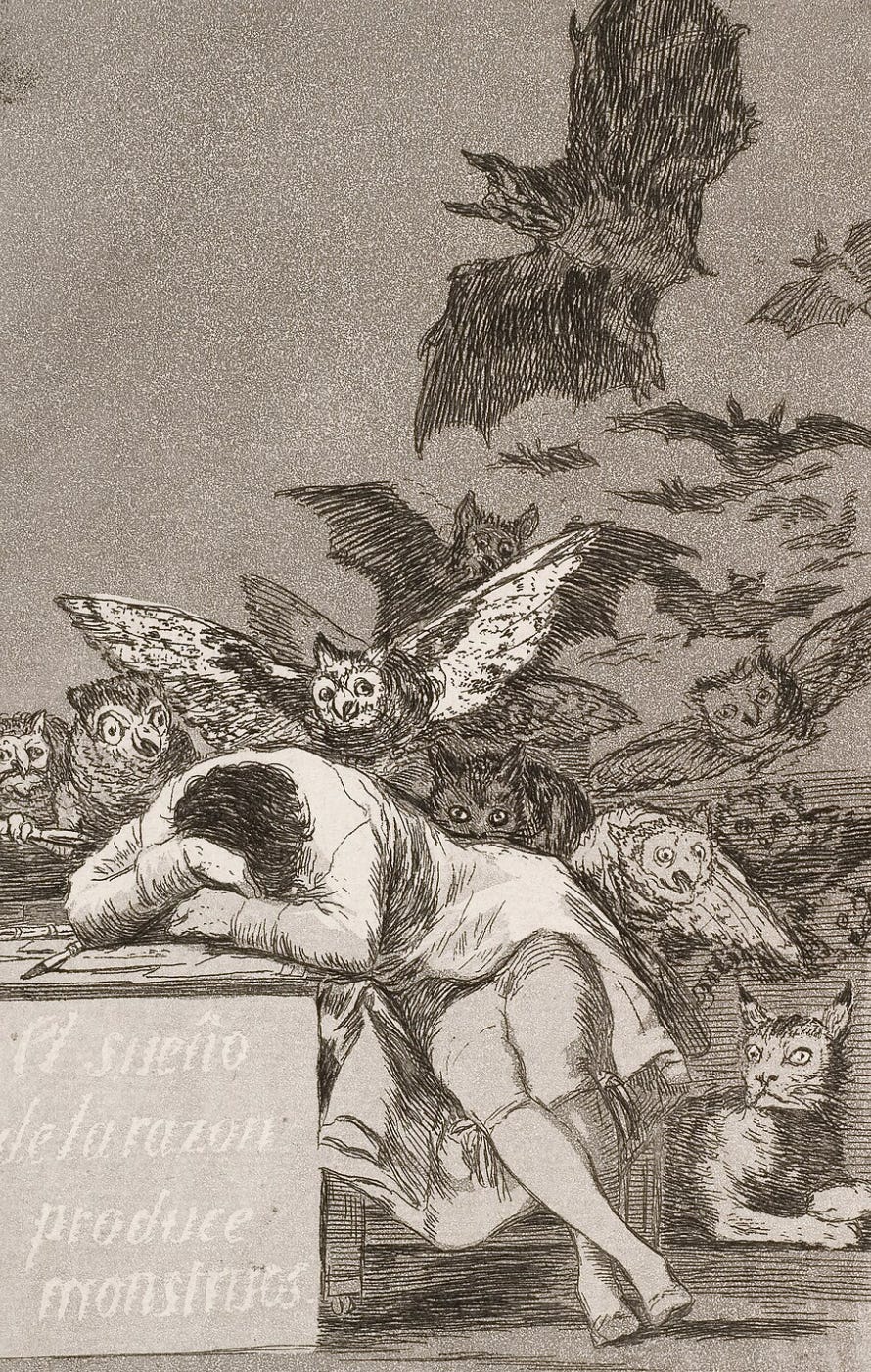
Mary Shelley describes the idea for Frankenstein coming to her in bed with her eyes closed, a vivid waking vision that was not quite sleep.
You can believe whatever you want. You can believe in God, the devil, the Multiverse, you can believe in an infinite universe, you can believe that all of humanity is created by two waiters playing chess in a café in Buenos Aires. But the physiology remains the same.
One of the ways that you can induce Hypnagogia is doing Yoga Nidra, or what the scientists call Non-Sleep Deep Rest. This is a guided meditation where you lie down and you listen to a voice and focus on exactly what it tells you to. Try it in the afternoon after a long day and right before you write. I recommend Ally Boothroyd.
Do a session of Yoga Nidra, and then get up and write.
Another thing many writers do is keep a notebook by their bed so if an image is jarring enough, you can write it down, without thought, and then the next day read it and see where it might lead you. Collect these images.
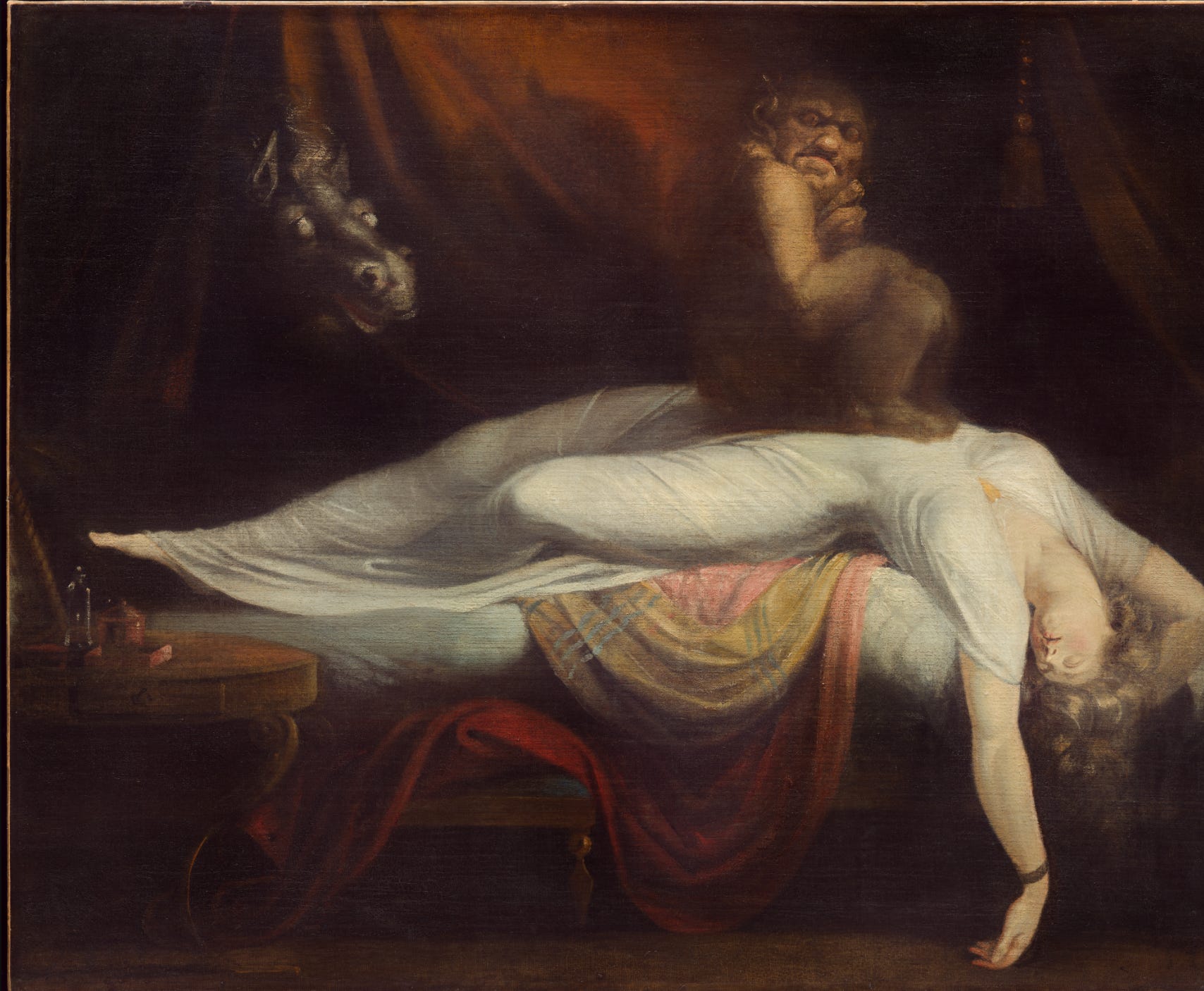
When that quote by Shakespeare I mentioned above is cited (and it often is), Hamlet talks about being bound in a nutshell, which means everything that we need is inside of us. Yet we often leave out the last part of the quote, “were it not that I have bad dreams.” Mary Shelley saw a monster right before sleep. Sometimes the tension, the evil, the stuff of Creative Writing comes out during hypnagogia. We are in Nepantla when we are in the hypnagogic state. Value it. I recommend that you do not use earphones when you are falling asleep, and that you don’t look at the screen an hour before bed, so that your creativity is not structured by algorithms that belong to somebody other than you.
(In Part Three, write I’ll write about another the state of consciousness where humans spend most of their time, the Default Mode Network of consciousness, DMN, which is neither Flow nor Hypnagogia and which a writer can learn to experience for optimal creativity and intellectual clarity)
[1] Or the mundus imaginalis. or the archetypal world, or Yesod –the imaginary worlds that humans often access under the spell of focus and which are just as “real” as the physical world.
[2] The left and right sides of the prefrontal cortex. This part of the brain is responsible for telling your story, for who you believe you are.