

Every good piece of writing hides an Aleph moment.
In the story “El alef” by Borges, there is the moment when the main character, who is Borges, is looking at an Aleph, which is more than just the first letter of the Hebrew alphabet, but it’s also a point in space and time where all space and time exists at once. The aleph is impossible to conceive, let alone try to describe with language, and when he tries, he writes, “here comes the ineffable part of my story.”
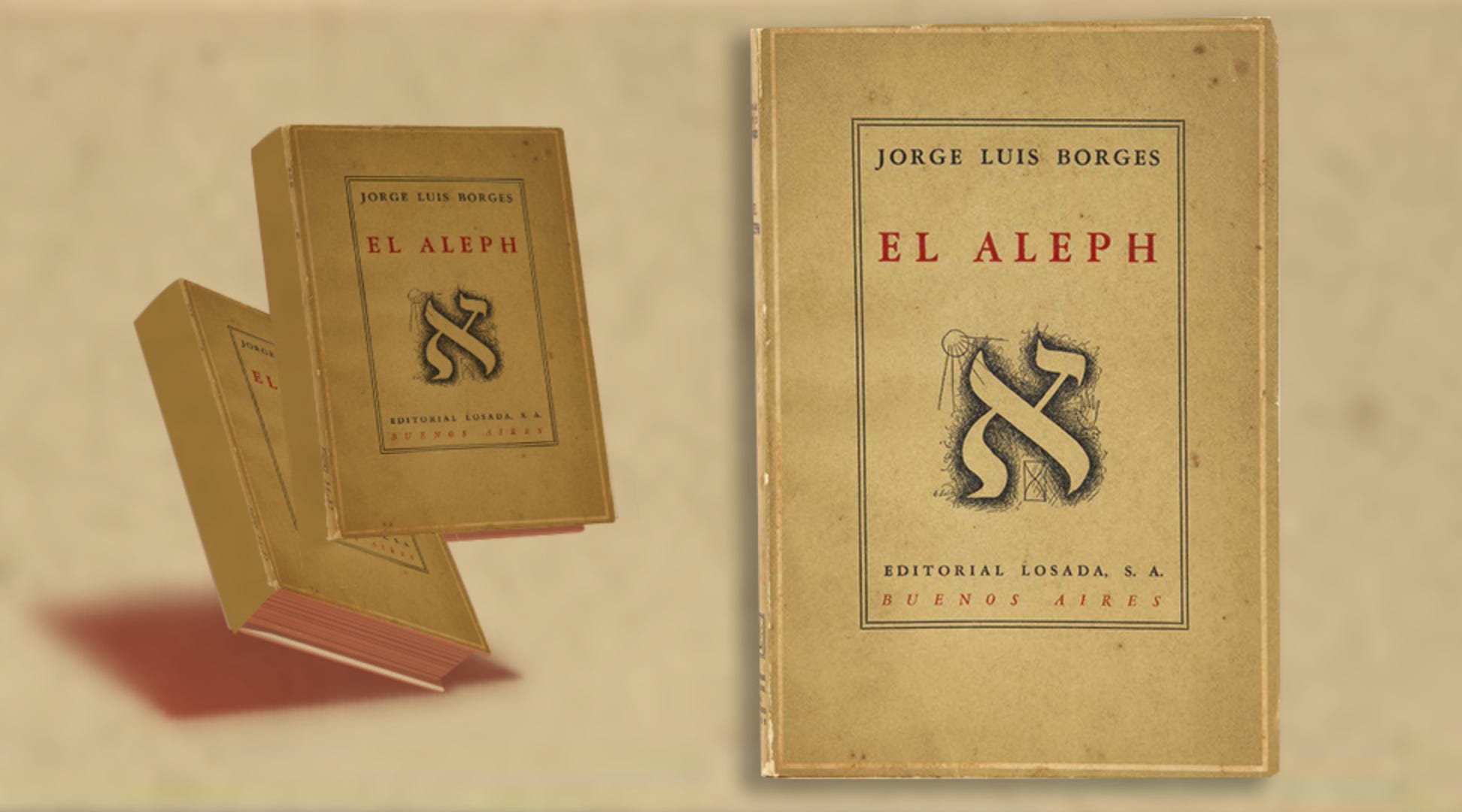
How do you describe seeing and experiencing all things at once?
I can barely describe the cat sitting on my lap as I write these words, scratching her neck with a handle of my coffee cup. It gets harder when I’m looking at something stunning, like a murmur of birds moving like a mobius strip over the mountain, or a child running into a field. Even at that level, it’s ineffable, because my experience isn’t just visual. It’s physiological, spiritual, and so many other things going on in my body and my brain and my history and my culture. How can I describe what I’m experiencing? Now try to explain an image that contains all images, all experiences of all beings that have existed, exist now, and will exist in the future. It’s not easy, but in trying to do so, Borges comes up with a beautiful attempt, worth quoting at length.
Vi el populoso mar, vi el alba y la tarde, vi las muchedumbres de América, vi una plateada telaraña en el centro de una negra pirámide, vi un laberinto roto (era Londres), vi interminables ojos inmediatos escrutándose en mí como en un espejo, vi todos los espejos del planeta y ninguno me reflejó, vi en un traspatio de la calle Soler las mismas baldosas que hace treinta años vi en el zaguán de una casa en Fray Bentos, vi racimos, nieve, tabaco, vetas de metal, vapor de agua, vi convexos desiertos ecuatoriales y cada uno de sus granos de arena, vi en Inverness a una mujer que no olvidaré, vi la violenta cabellera, el altivo cuerpo, vi un cáncer en el pecho, vi un círculo de tierra seca en una vereda, donde antes hubo un árbol. . .
I don’t want to give the wrong impression. I didn’t read this story in Spanish. I’m bien pocho and read it in English, so here’s the translation:
I saw the teeming sea, saw the dawn and the dusk, saw the multitudes of America, saw a silvery spiderweb at the center of a black pyramid, saw a broken labyrinth (it was London), saw endless, immediate eyes watching themselves in me as in a mirror, saw all the mirrors on the planet and none reflected me, saw in a backyard on Soler Street the same tiles that thirty years ago I saw in the entryway of a house in Fray Bentos, I saw clusters of grapes, snow, tobacco, veins of metal, water vapor, saw convex equatorial deserts and each one of their grains of sand, saw in Inverness a woman I will never forget, saw the violent hair, the proud body, saw a cancer in her breast, I saw a circle of dry earth on a sidewalk where once there had been a tree…
That’s the aleph of moment of his “Aleph”story, which can serve as a metaphor for writers to understand that good writing has an aleph moment, sometimes more than one. This is where the velocity changes, where energy pushes the language like a force acting on matter.
Using a Physics 101 metaphor, inertia is when an object moves at exactly the same velocity and vector. There is no force acting on it, no need for it to change its direction.
What a metaphor for writing!
I don’t want too much inertia in my writing. I want to accelerate and deaccelerate.
Sometimes, it’s best for me to slow down, for the reader to stop or pause on each word. Staccato sentences become percussive. Other times –¡de repente!–the language starts to push and gush out a whole bunch of things that I didn’t even know I had inside me like micro memories and feelings I forgot I had –and the words avalanche down the page collecting more and more debris until you reach the bottom and then, bang! It stops.
Now a new sentence.
The only way to change inertia in poetry, like in matter, is when a force acts on it, a push to make it faster or friction to slow it down. It follows that whenever writing changes velocity, there’s a force behind it. Force is energy is passion is desire and myriad things the writer consciously or unconsciously wants-needs to say. This is the aleph moment. I could look at some of the writing my students turn in and help them to recognize where in their work the energy wants to take over.
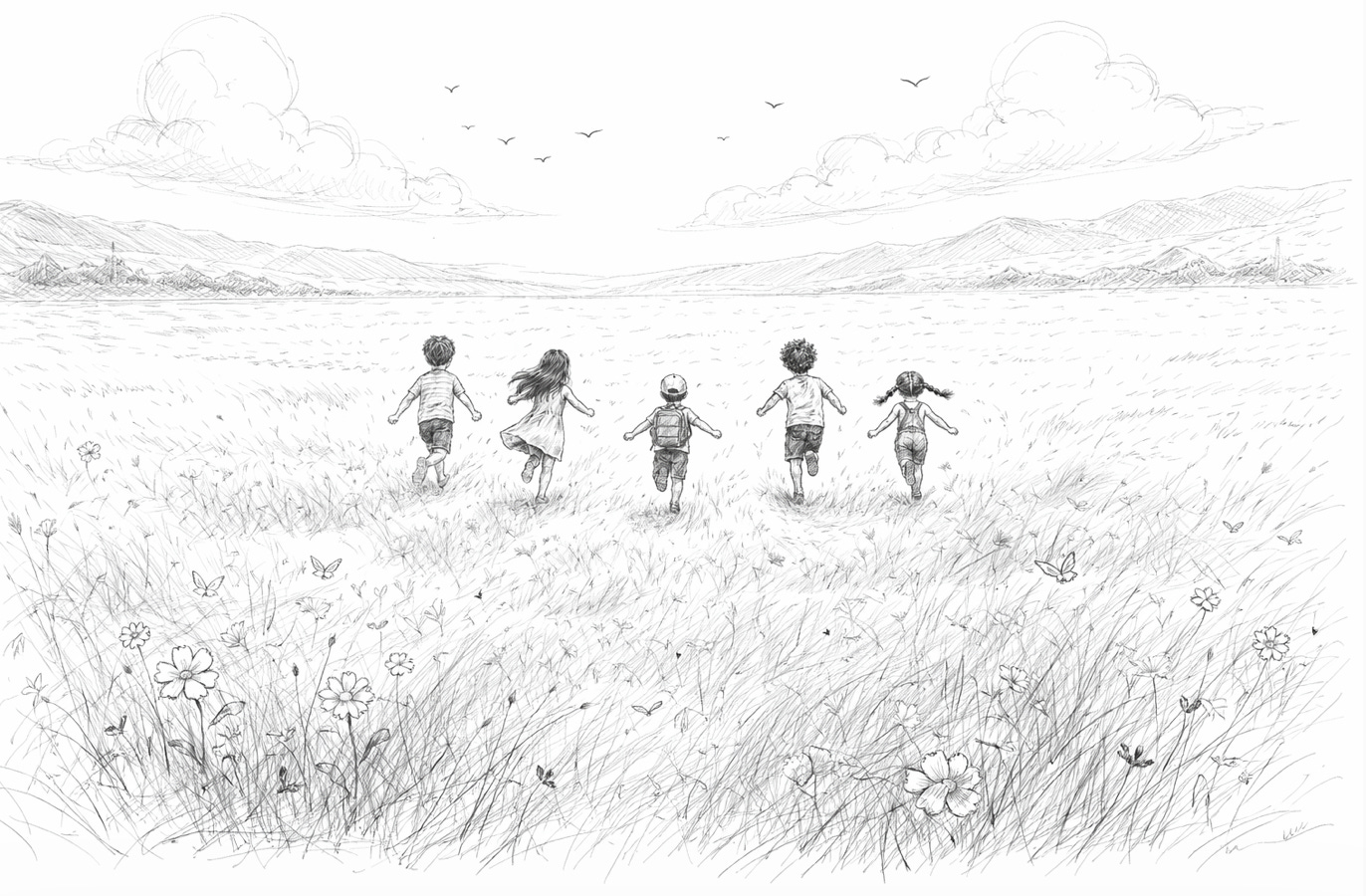
After the first draft, if they can recognize their aleph moment, they will see that the images at the center of it are evoking something profound in them, something deep inside, some psychic and spirit energy, something ineffable like children running into an empty field.