

As mentioned earlier, Aleister Crowley called magick “The Science and Art of causing Change to occur in conformity with Will.”
How can magick be a science?
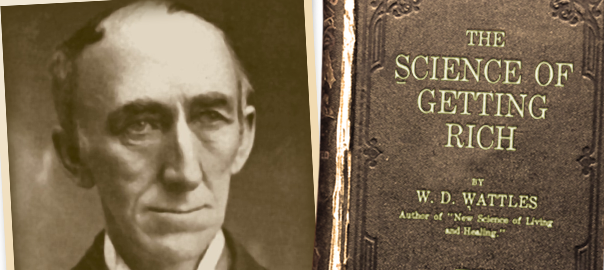
I can't help but think of one of the foundational texts of New Thought Philosophy, Wallace Wattles’ The Science of Getting Rich, wherein he insists getting rich is “an exact science, like algebra or arithmetic.” This small royalty-free book published in 1910 is the philosophical structure of New Thought, but like a Raymond Carver story in his minimalist days, it’s stripped of much of the prosaic elements and presents the essential components of the philosophy of getting rich, now often called Manifestation. Most get-rich gurus call their system a faith-based philosophy, but Wattles insists it is an exact science, like gravity. And although he makes a seemingly self-congratulating claim that if you want to get rich you don’t need to read any other book but his, it’s true. All other manifestation books use the same structure regarding the behaviors necessary to achieve wealth, but they add cultural nuances, most of it based on Christianity. Napoleon Hill frames his Think and Grow Rich to a Christian perspective, adding values therein, but with Wallace, there is no value, only the science of getting rich. He has taken the basic elements of the philosophy and presents them as science.
To want to get rich is one way to manifest the evolutionary imperative of what used to be called “to procreate,” but which we now can amplify to mean the desire to flourish (using Antonio Damasio’s language), which means to thrive, to expand, to explore new horizons. If we take away the word RICH and replace it with FLOURISH, the claim that getting rich (and magick) is a science makes more sense. We know that human organisms can act in certain ways that lead to flourishing and others that lead to early death or suffering.
At my age, it is a scientific fact that if I put unhealthy foods into my body at extreme rates and drink a lot of alcohol and sit on the couch most of the day and never exercise except to get to the grocery store, my behaviors will lead to circulatory and physical problems and will atrophy my body and shrink my brain’s ability to spark new neurons, and under these conditions I will not be able to flourish. I will not get what I want. I might want to write another book or go to faraway places and give workshops and lectures; I might want to play with my child in the park, but at 62, if I don't act in a certain way, my body will not be able to be produce the energy needed to accomplish my desires. I will not flourish.
There is a basic code to humans that can be definitely called a scientific fact. We need energy. No matter what we want to accomplish we need the energy to do it. We want to work in the garden planting flowers, we want to write, we want to do business, then we need the energy to do so. The basic code for energy is sleep, nutrition, and exercise. These three things produce energy, and energy, to quote Blake, is eternal delight. I cannot get rich without energy. I cannot write a novel without energy, and although it may not be obvious, even these words that I'm writing now, which I deeply care about and I probably do far too many revisions for a Substack post, cannot be created without a tremendous amount of energy. Without energy I do not have the ability to focus. Trying to focus on something when you're exhausted is sometimes impossible.
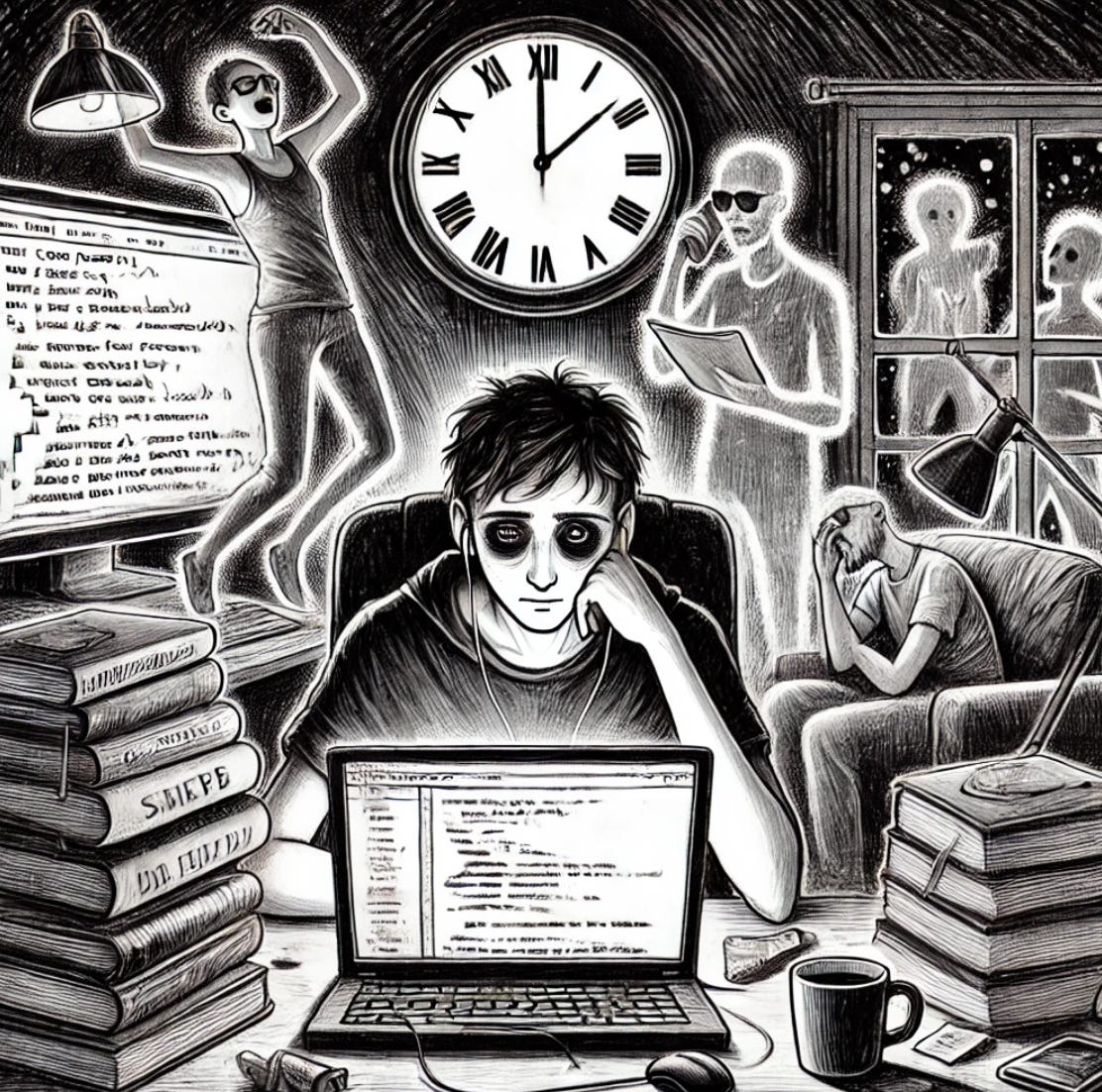
So we need these three things, quality sleep, which includes REM and slow-wave sleep; we need protein, fiber, and probiotics; and we need to move our bodies. If we sit all day long, whether it's in front of a TV or in front of a computer, our bodies will suffer and they will end up requiring attention that will take the energy away from what we want to focus on. Obviously, we’re not referring to the marathons young people are capable of doing, going without sleep for two or three days while writing code or finishing a novel. I used to be able to go out and party all night long and then the next day focus on my work and spend hours writing or evaluating manuscripts. People who are capable of being productive without these three essentials have a different timeline and get bursts of intense energy that may last years, but they can't continue to deprive themselves of the three elements for the rest of their lives, unless they die very early.
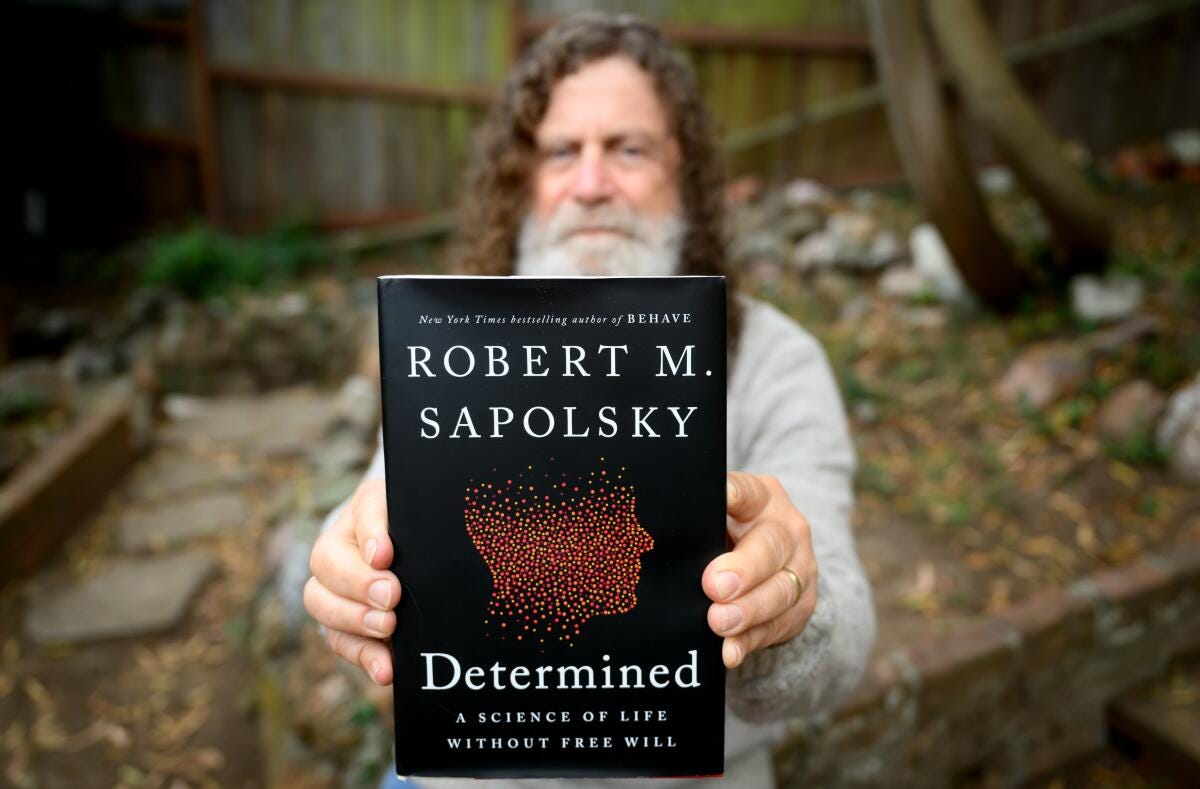
But that part of the human code, how we produce energy is only one aspect of the entire human system, which is too complex for humans to understand. Scientists often say that understanding the universe may not be possible for the human brain, but I say understanding humans is beyond the mental reach and capability of humans. Scientists cannot even agree on free will, and although philosophy and religion have told us that, yes, we have free will, there’s little science to back this up . I recommend Determined by Robert Sapolsky, a scientist who claims humans do not have free will, and he shows, step by step, how the decisions we make are physiologically inspired and often beyond our conscious control.
Wattles makes sense when he calls getting rich a science, if we think of riches as flourishing, as staying healthy, as expanding our sphere of influence, as energy.
But coding aside, we often compromise our lofty visions to act on our emotions in counter-productive ways. I love my wife, and she loves me, but sometimes our emotions drive us to say and to think things that are not aligned with what we want, which is to create a strong and loving family. If we act on contrary emotions when they arise out of our physiology, we can derail our goals. Our bodies and viscera send messages to our limbic system and emotion becomes feelings --becomes thoughts --becomes actions that may result in irreversible trajectories away from what we desire.
I can't help but think of a friend (and this story breaks my heart) who was a tenured professor at a tier-one university and became an associate dean. She got so frustrated with the chains of bureaucracy (as being a dean can do) that one morning at three AM she wrote an angry email to her immediate supervisor saying she quit, not only the administrative position, but the whole damn university. The next day, she knew what a mistake she had made. This was a better job than she would ever get again, but it was too late. The Provost had already accepted her resignation and wouldn’t let her retract it. The last I heard she was selling jewelry through Etsy.
We are often driven by emotions that distract us from the behaviors that we know will lead to flourishing. But here’s the cool thing. Writers are masters of emotion. . .or can be.
For writers, emotions drive us to create something new. These are our riches. A true writer cannot Not write, and when we are creative writers, we are often driven by language. We can follow language into a poem or story, and whether we are conscious of it or not, the voices we hear and we follow, the music, the poetry, the prosody come from the body. This is what it means to say that poetry is visceral. A poet will do well to let go of the thinking mind and let the body write the poem. The body knows things the so-called CEO of the brain does not know.
Writers who are driven by the prefrontal cortex to write a draft will be no more successful than early versions of Chat GPT while using a poor prompt; the work may be good in form and structure, but it will lack soul, spirit, duende. These things are not possible without the body, the nervous system, the brain which somehow allows us to access the “mind,” to experience consciousness, the pain of rejection and the taste of a ripe mango.
Writers convert homeostasis into art.