

“I saw the best minds of my generation destroyed by madness, starving hysterical naked…”
I still have my Facebook account.
I’m old enough to remember when Facebook was the new thing, replacing Myspace, and I remember that when we, that is, creative writers entered into the platform, it was great. We were able to communicate with other writers like never before, to share ideas and events that mattered to us and our communities; and if we were socially progressive or from an historically oppressed group, we were able to have a safe space to communicate our opinions. I’m a Chicano writer, and I had a large community of other Latinx writers and readers and scholars, university professors, graduate students, and it was a useful platform. Writers could assert our work and our collective influence on publishing.
Back in the old Facebook days, social media feed was like the plaza of a small city in Mexico. We could hang out there for a while, that is, scroll through the feed, catch up with our friends, meet new people and have meaningful conversations. Of course, there were ads back then, because Facebook has always been a business, but the ads appeared on our virtual landscape like balloon vendors or elote stands in the Zócolo. If you wanted to buy something –and sometimes you did—you’d click on it. But we knew the difference between our friends and the vendors.
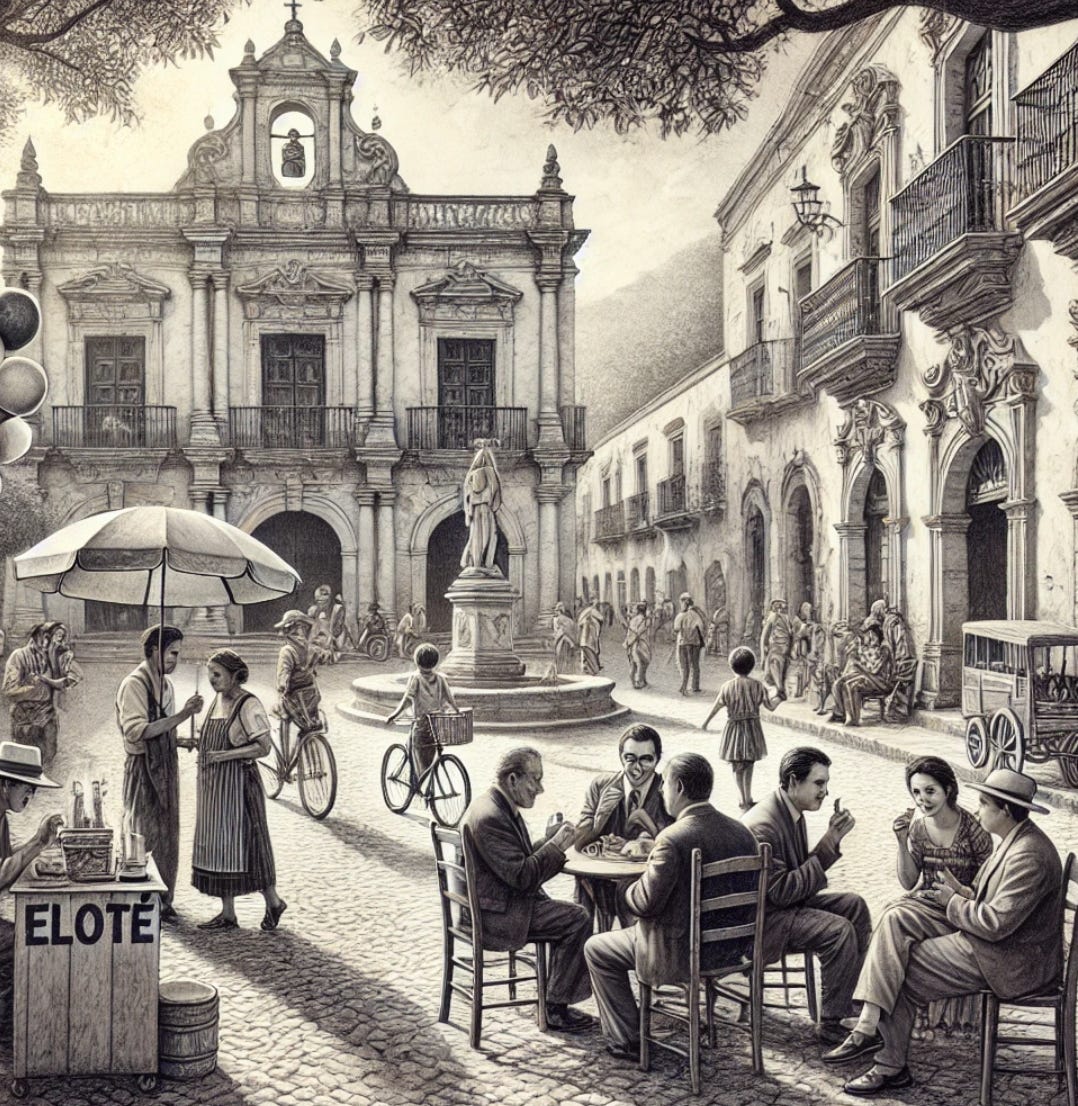
In those days there was only the “like” button, no “sad” button or “love” button, only like, and when we talked about something in the plaza --maybe we were excited about a new book, or we just won a literary prize, or even if we only had an opinion on the state of Latinx literature-- we felt good when our friends listened. Every “like” was like our friends nodding their heads as we talked about what matters to us.
Nobody knew how the Facebook algorithms worked, so when we scrolled through the feed, we didn't know who we would see or who would see us, but it was a familiar place, almost predictable. It was useful. It was a new way to build and strengthen community.
There were some friends I would almost always see in the plaza, like Lee Herrick, the California poet laureate, before he was so well known. He’s my friend off and on Facebook, and he would say beautiful things, important things, and people would gather around and listen to him, nod their virtual heads, and in the comments section we would say things to support him.
Ok, boomer! What’s your point?
Today the Facebook feed is not a plaza where friends gather with friends.
The platform is not populated by colonial buildings and a cathedral of my imagination, no shady trees and park benches, and most importantly, our friends are scattered among and often indistinguishable from the vendors. The Facebook feed is like the Las Vegas Strip, Piccadilly Circus, like Times Square2.
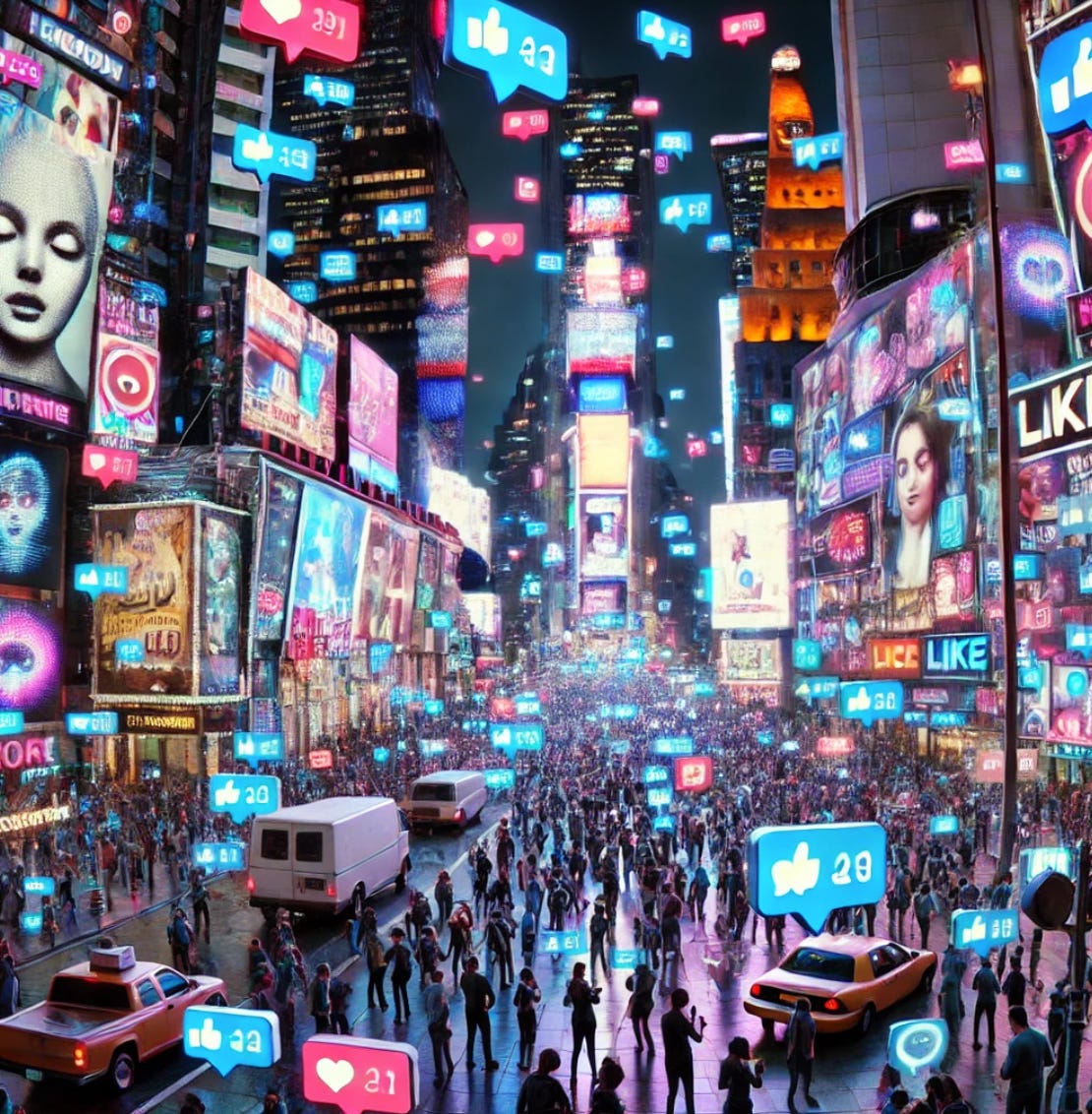
Not only are there fewer friends in the virtual streets, but there are constantly moving videos, music, posts, pick pockets, and rants from crazy accounts that we don’t follow, and we have to walk through this place to find our friends.
The feed is a meta-versal metropolis, where pings and flashy things pop up out of the air and distract our attention away from our friends. Johnathan Haidt says that handing smart phones to our kids is like putting a Las Vegas casino in their hands, which is an apt metaphor, because once you enter a casino, there are no clocks, no visible exits; there are only pings and dings and flashing objects trying to grab your attention, so that you will go there and put your time and money into it. Casinos are designed to keep you in casinos, and that is the model of social media.
(Next time, we’ll explore how poets can be among the most vulnerable to social media algorithms, unknowingly engaging with AI-generated content and bots)
To me, Facebook in the early days was like an ongoing cocktail party, where all my friends, former cast members from shows, and friendly acquaintances would be, at any hour of the day or night. They would reminisce about how, "those were the days, my friend...," share old scanned photos from our younger, wilder years. I remember throwing sheep to get someone's attention if I hadn't heard from them for a while. It was a giddy, good-natured thing to do, a way of saying, "Hey, you okay there?"
In the beginning, it was still possible to scroll through my feed and catch up on every posting I'd missed from every friend. Now I have over 900 "friends," and it seems only about 12 of them even see or engage with my posts at any given time. Now, when I post about a minor health complaint or a warning about upcoming weather, they may not see it for a week, so their response is out of sync, and I have to assure them I am all better now, and the snowstorm was over days ago...
My kids say Facebook is for "old" people, and they refuse to use it. Instead, they have Tumblr and other obscure (to me) SM platforms that I cannot understand how to use. (They have forbidden me from following them, anyway.) I x'd out X months ago and joined Bluesky, but I have to keep reminding myself to post there, and the experience doesn't feel like "home." I guess Facebook doesn't anymore, either, but it's familiar, and I know how to use it, mostly. (They keep changing things, though, so I may not be using it right. I dunno...) Almost all of my posts these days are about political outrage. There is small comfort in having my outrage acknowledged, but I have long since eliminated from my wall anyone who might have a dissenting opinion, so it's sort of like cheating at solitaire.