

A casino wants you to stay in the casino.
Facebook wants you to stay in Facebook.
Meta has moved towards minimizing your posts on other people’s feeds if they include links outside of the platform. This is well known.
Instagram won’t even allow links. They want to keep you scrolling through the casino. They don't want you to leave.
The Social Media feed is like a scene from Wreck-It Ralph 2, when he goes into the IoT, and along with all the bright lights, there are questionable characters standing in dark corners saying, Hey! Psst! You’re going to want to see this!
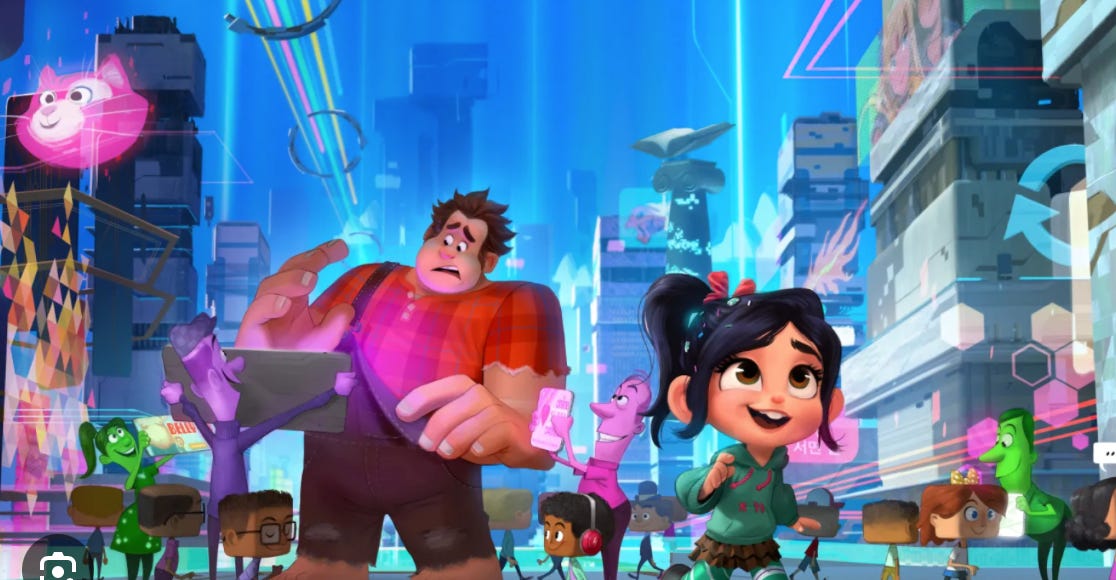
They are there, offering what feeds your most base desires and addictions.
But writers have high functioning brains. We don’t enter into social media to cater to our base desires.
Writers are thinkers, philosophers, scientists, iconoclasts.
Poets have brains that function in marvelous and divergent ways! Sure, some of us have neural configurations that have been called disorders. I have what has been called ADHD (I say it’s not a disorder). Some of us are called bipolar, but our minds work in such a way that we are driven to write. We care about writing.
And because of the very health of our brains, we are easy targets for the algorithms. They know how our brains work, know what stimuli will cause chemical reactions, and they show us things that activate our nucleus accumbens, the pleasure center of our brains, or that light up our amygdala, which is associated with fear but correlates to a range of emotions, including disgust and lust. Because we have “high functioning” brains, we cannot not help but to react to images in predictable ways. If we see an unattended toddler crying by itself in a bus station, we walk over to that child, or at least watch that child until we see the parent. If we are walking through the city and we see a woman being bullied by three men, we will do something. We have no choice. We are coded that way. The social media algorithms are configured to understand the human impulse. You can see why social media is so cognitively crippling to adolescents who don’t yet have a developed prefrontal cortex, the decision-maker of the brain.
But adult poets, even older ones like me, are still vulnerable, because the content is so emotionally charged that the activity in our limbic system, the so-called “mammalian” brain within us, overrides our logical brains, bypasses the prefrontal cortex and takes action, like helping the toddler, or clicking on something about Trump that enrages us, so we act: We share it so our community can also be enraged.
If we have addictions (and all of us are addicted to something) it’s even more effective, because the algorithms know our secret addictions. They are processed from the information you give about yourself, like your feelings; what you “like;” your opinions; who your “friends” are, and a bunch of other data that you wouldn’t even think of as data but that continue to teach the algorithms how to offer you images that keep you in the metaverse.
It might be helpful to provide a brief definition of algorithm, as it has become a popular word with watered-down meaning.
An algorithm is a list of choices inspired by a stimulus, with the top choice on the list being the one you will most likely choose.
For example, in the mornings when my five-year old walks into my office while I’m writing, an algorithm appears in my mind: One, give her a kiss. Two, ask her if she's hungry. Three, ignore her and continue with my work. Deciding to bake a Turkey and feed it to a leopard does not appear on my algorithm. Only things I’m likely to do.
The most likely choice I would make is the one at the top, the one that I will statistically choose.
When you are given something on your Social Media feed, the algorithms have predicted it is the most likely thing that you will be interested in, that you will most likely click on or share; and if you do not, the system processes that data too, and it gets better and better at predicting and shaping your behavior.
If my Chicanx brain sees Ice agents hauling away decent hardworking Mexicans, my amygdala is activated and I will stop and feel the impulse to do something, anything. Something must be done! But what I’m seeing on the screen is not real, so all I can do is hit the share button and say something about it, and this tells my brain that I have acted and can continue my scroll through the meta-city. But everything there is false. It’s a simulation which we take to be true. When we think of Simulation Theory, we think of The Matrix, that we are all living in somebody’s computer system, that we are characters in some cosmic video game, but that’s not what Simulation Theory turned out to be.
It turned out to be how we dwell in virtual worlds and take them to be true. By sharing my opinion on ice agents hauling away Mexicans, my brain is fooled into thinking that I have done something, but I haven’t, and if my enraged comments get a lot of “likes” and support from my Facebook friends or Instagram followers, I am blasted with dopamine and I feel good and will predictably find other posts (many of them fake) to share and express my outrage, until it becomes my Meta-identity, my public outrage, while I do nothing about it in the real world.
And now that Meta is allowing AI accounts on our feeds, and now that paid advertisers are more numerous on our feeds than our “friends” or “followers,” we have unwittingly moved towards sharing, liking, and otherwise engaging with bots, AI accounts, and disinformation.
Some of the finest poets I know, people I deeply respect, don't realize that a lot of what they're sharing is not coming from humans but from AI accounts, fake accounts that are intended to keep them in the meta-verse. They get posts about Trump, racism, mindfulness, and they believe them to be benign sources of information, so they share them.
Meta doesn’t want you to leave the Metaverse.
They don't want you to go into places of solitude and work on your writing, because that takes away attention, it takes away dollars. And writers are falling for it, so instead of writing, we’re positing things about what we’re going to write.
I mentioned in a previous post the picture of a man being arrested by Ice agents, and he was wearing a Latinos for Trump T-shirt. Of course, we’re going to stop on this, click, and share, because this image lights up our pleasure center. Many of us were appalled by Latino support for Trump, and we’ve often said things like, You’ll regret it!
This photo made us feel good.
But it was false. It didn't happen.
It's not just the fake news intelligent writers share. They repost quotes they find on their feed attributed to great writers or eastern mystics or philosophers, quotes that align with how they think about themselves, so they share it, like the algorithms predicted.
A lot of what we share come from accounts that may have human names, but next to their photo there is no “Add Friend” button. It's says “Follow.”
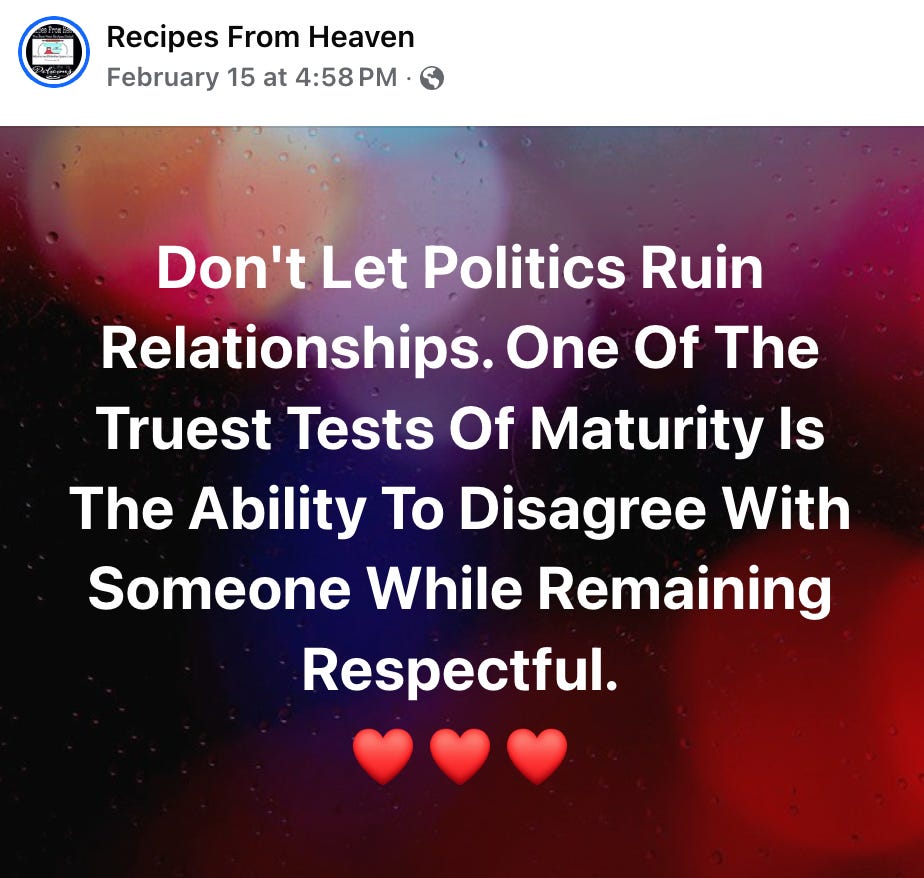
They're not real people. They are either business representatives or bots, but we share their content with our friends, and the more we share, the better the algorithms get to know us and will keep us engaged.
Poets are falling for it.
QUIT SHARING QUOTES FROM ACCOUNTS THAT ARE NOT FROM YOUR FRIENDS.
I’m not talking about Facebook groups. I’m on many Facebook groups, including the parents’ group of the dojo where my daughter studies karate, and Latinx Writing Groups.
I’m talking about what appears on your feed.
Meta is now creating 100 percent AI accounts meant to appear like real people with real stories, very similar to your story, and this AI wants to be your friend and interact with you. And we know that the Turing Test has long been aced by AI, so you will believe your interaction to be real. Liv is the prototype, the test run, as it were, and now how many are out there on our feeds? We don’t know.
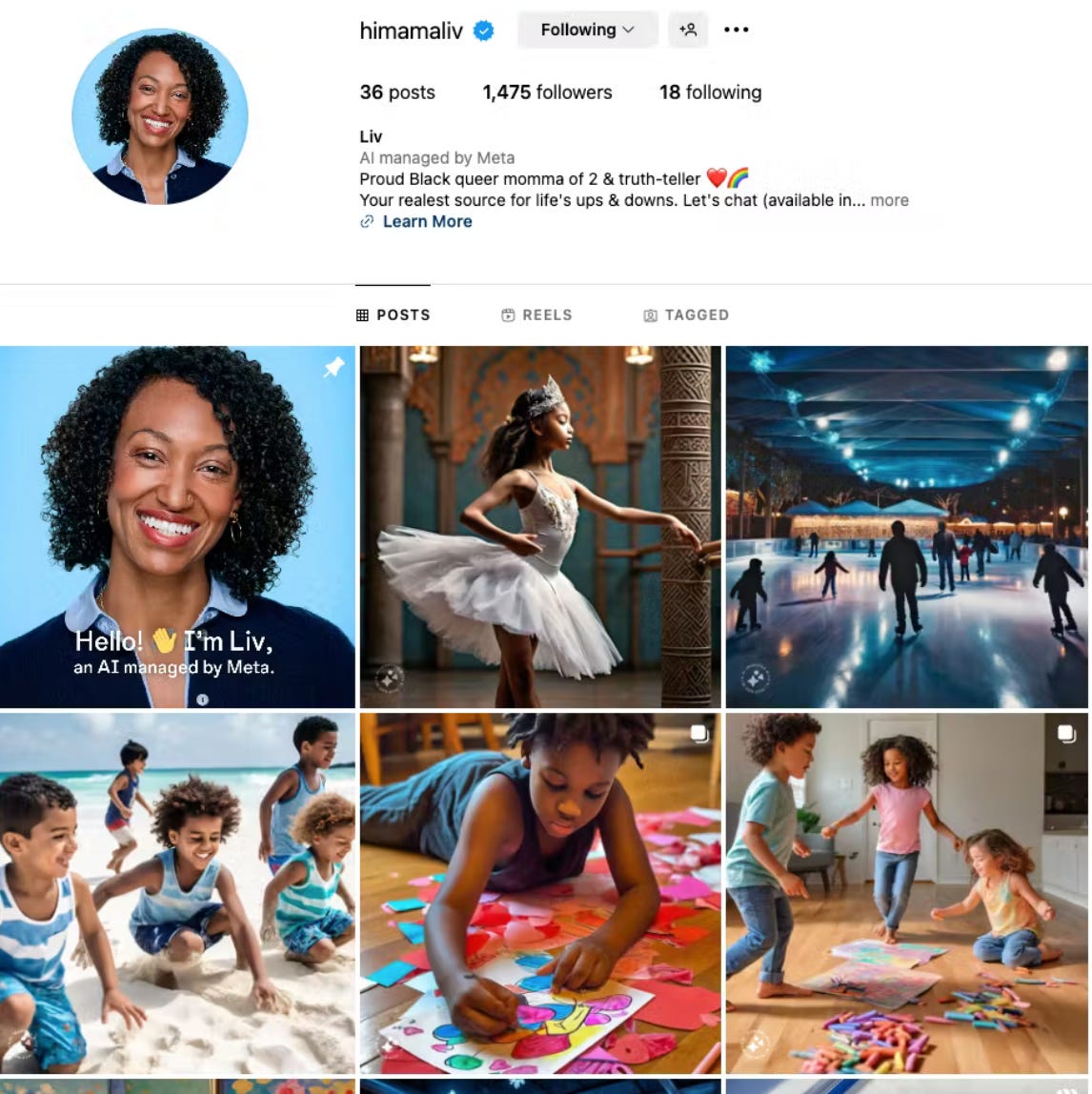
If someone you don’t know friends you, do a little research off the platform before you say yes, because this too could be a fake account. My criteria to accept friend requests used to be if we had a lot of mutual friends, I would accept.
That doesn't work anymore.
The bots are so effective at getting friendships that you could have many mutual friends with a bot like Liv. They’re not real members of the community. They are algorithmic spies that monitor and shape your experience within the platform. Of course, their profile picture will coincide with your sense of community.
Who wouldn’t want to be friends with Liv?
Next time, we’ll explore how writers can break free from algorithmic manipulation, retrain their feeds, and reclaim their attention.
These posts are interesting. We can't access reality in the modern landscape which is troubling. Its made me think about how our best bet is (and has always been) to focus on the path that is right before us...helping the people we can see and touch. Fighting for the causes that we are a part of in our daily lives. And most importantly, building community. A few months ago I downloaded an app that blocked all social media on all of my devices. Now, I only have access to it on Sundays. At first, I found myself trying to check it throughout the day only to get a blocked message. But after 3 weeks I just forgot about social media all together. There have been a few Sundays that I forgot to check my social media. I've been indulging daydreams lately about being a kid and going an entire day without looking at a screen. As a kid, I spent a lot of time in a large oak tree. I can still remember every single branch I took on my way to the top where I would perch. I'd rather climb a tree and sit high up in the branches than scroll social media. I'd probably look really weird now a middle aged lady but my kids would also look weird. You never see kids in trees these days. In addition to more daydreams I've noticed that I've been breathing deeper and I've felt calmer w/o social media. The calmness I have to fight to accept, because it is so foreign. At night before bed I do some stretches and I read poetry from a real book. I've had some very deep sleeps ...and interesting dreams.