
Fuck Magical Realism

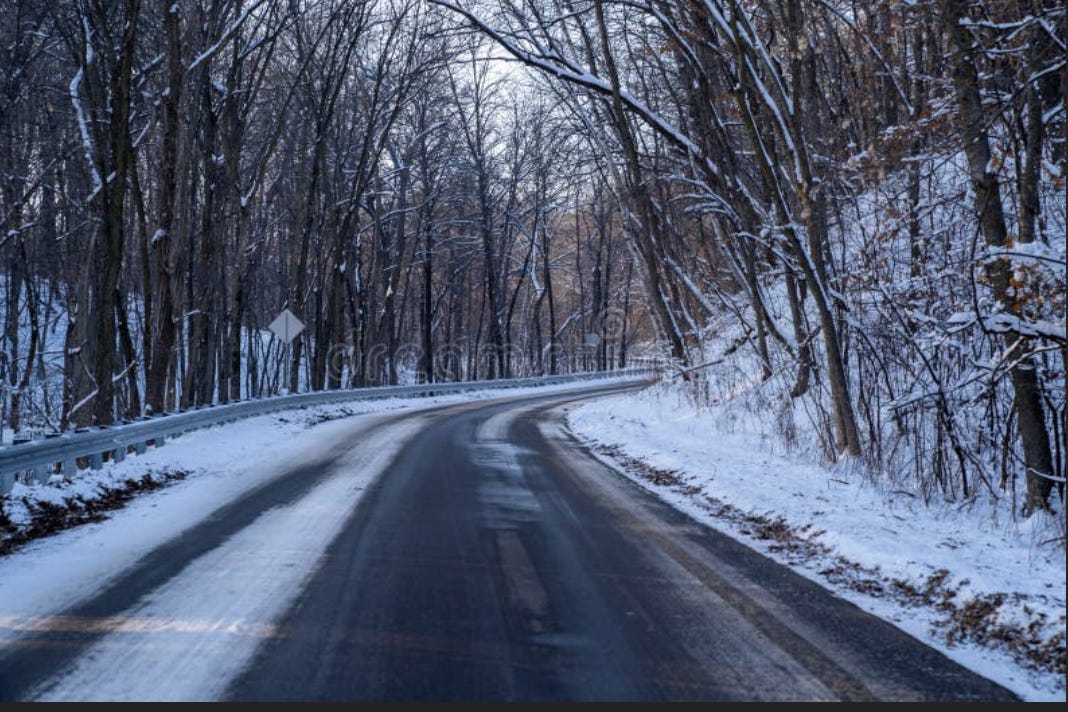
I discovered Nepantla in rural Minnesota, and although it wasn’t the first time I found myself between the imaginal and the material worlds–something I now know is experienced by scientists, mystics, artists, witches, poets, and probably a few crazy people–it was such an amazing experience that it felt like magick.[1] The Nahuatl word Nepantla literally means in-between spaces, like one foot in the door and one foot out, but when Gloria Anzaldúa resurrected the word it evolved into a description of people who live between the Mexican/Us border, which is not just a physical place but also a liminal space in between realities.
The word expanded its possibilities with Stephanie Elizondo Griest in All the Angels and Saints, where it suggests the “in-between” spaces regarding different versions of self, between who you were last year, who you are now, and who you imagine yourself to be. When I use Nepantla, I include the philosophical/spiritual in-between, that is, between separate realities.
Nepantla lies between the material world and Platonic space, that is, between what Henri Corbin calls the Mundus imaginalis and the world where our bodies eat and sleep. The imaginal worlds are often abstract, like the mathematical world, but I would also include “dream-like” places rich with images and prosody. Many artists visit the imaginal worlds when in the state of Flow, the Writer’s High. Corbin and Plato recognize that these nonphysical places that we can enter into with our imaginations are true places. The landscapes imagined by poets and mystics are just as real as those in the physical world. Nepantla even provides portals into the Many Worlds Interpretation of physics that tells us there are multiple realities, many of them with other versions of us. That physicists have dwelled in Nepantla is obvious with the great gedankenexperiments, such as Schrödinger’s cat (Schrödinger himself lived between realities), or Einstein imagining a world where we can chase light beams. The imaginal realms hold truths that reinforce our ideas about reality, but it’s helpful to remember that reality itself does not exist outside of an idea, a metaphorical framework.
I live in on the border of El Paso and Ciudad Juarez, and although Nepantla, means in-between cultures, languages, styles, urban architecture, etc, it also means how we easily cross over from one belief system to another.
Nepantla consciousness allows us portals from the material world to the mundus imaginalis.
So this is the story of my experience in rural Minnesota, and how I found a wormhole, how I discovered I dwell in Nepantla. If it were a fictional story, it would be called magical realism, but a better way to describe my work –fiction, poetry, nonfiction where weird events happen is–Napantla Realism. Magical Realism is a stinking badge pinned upon us by those outside of our experience. I’m a Nepantla Realist!
Why would critics call our work magical realism? And why is it when you have writers like Bernard Malamud and Toni Morison their work is not called magical realism, but fantasy or the fantastical to make is sound more literary. But with Latinos, from Chile to Chicago, whenever we tell stories that are real from a Nepantla perspective, they call it Magical Realism.
Why this judgment? Is there only one reality that can be realistic. One truth. Who’s? Who’s truth? Like the physicist Artur Edgington said, “The search for truth is a religious quest.”
Realistic fiction? That’s a straightjacket put around perspective, so if your consciousness is more expansive than that of your neighbors, you’re living in a fantasy world, or if you’re Latino, in a magical. I understand the intellectual idea behind the term. What Isabel Allende writes is magical, yet she writes realistic, character-based experiences. But the fact is, the “magick” in our stories is a slice of our reality. We constantly live in a world that, to the material minded, seems like magick.
(This excerpt is the opening of a longer essay about a woo-woo experience I had in rural Minnesota. It helps establishes the framework and ideas in my forthcoming book NEPANTLA REALISM (University of Mexico Press).
[1] I use the k at the end of magic to refer to magick as practiced by theurgists and the definition by Aleister Crowley. “The Science and Art of causing Change to occur in conformity with Will.”