

“A study by researchers at the University of Pittsburgh tested whether non-expert readers could distinguish between AI-generated poems (using ChatGPT 3.5) and those by renowned poets like Shakespeare, Dickinson, and Plath. Readers not only failed to tell the difference but often preferred the AI poems, rating them higher on rhythm, beauty, emotion, and originality. The researchers suggest that the simplicity of AI poems may make them more accessible, leading readers to misinterpret the complexity of human poetry as AI-generated incoherence.”
OK, so that’s the study I referred to in Part One. Now here comes my interpretation.
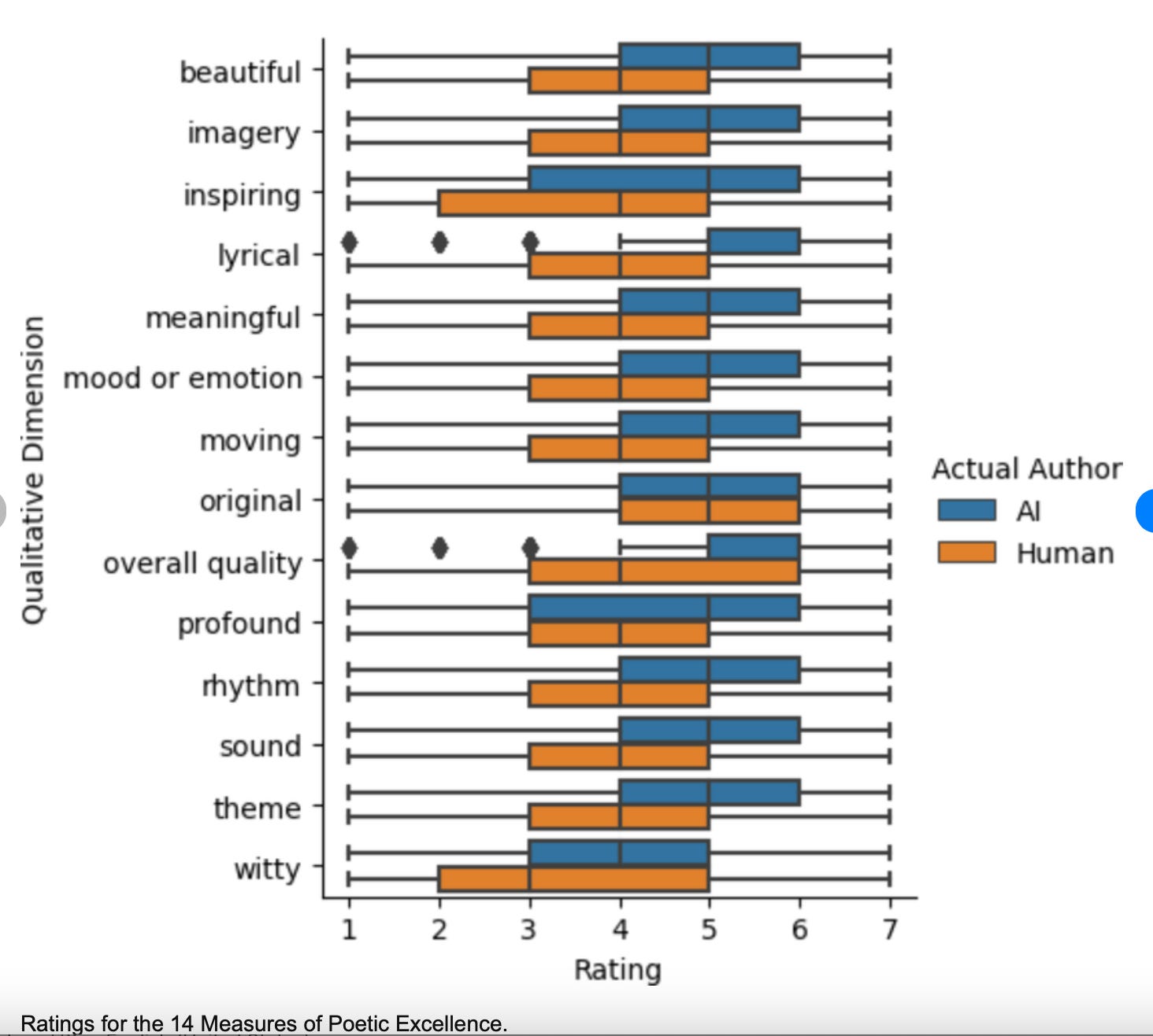
The results tell us what those in the “Ivory Tower” of the MFA have known for generations: There is a difference between the poetry that appears in a greeting card, a “Hallmark” poem, and a poem written by a good or great poet, one who studies the craft, the art, the traditions and styles. Those who study creative writing.
Does this sound a bit snooty?
It is.
But underneath that, the motivation of most poets is the love of language, the need to create something as beautiful and urgent as the poems of other great poets, CD Wright, Philip Levine, Gloria Anzaldúa.
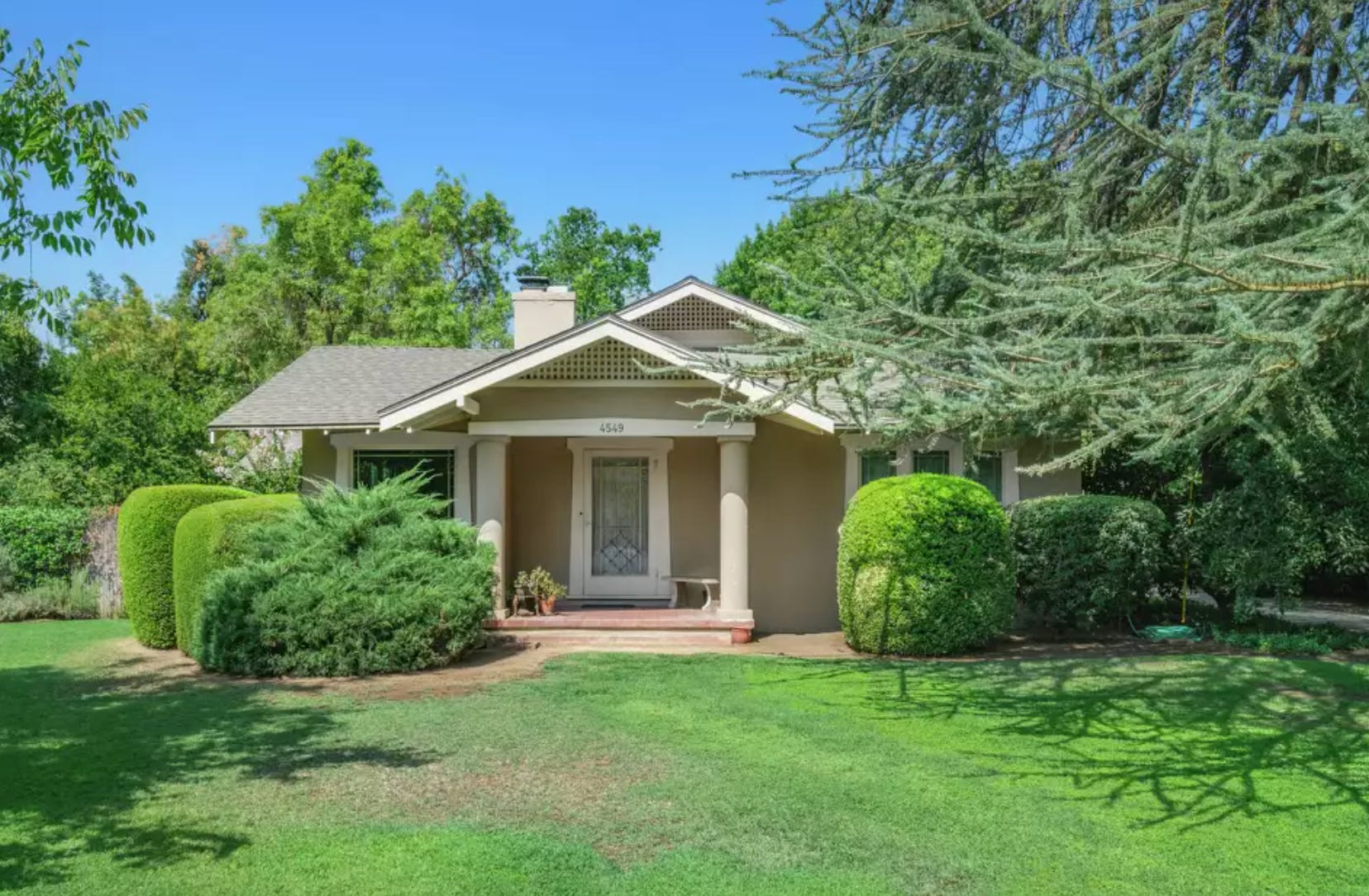
In 2005, I was The “Distinguished” Visiting Writer at the Fresno State MFA (their title, not mine) and got to live in the house of Philip and Franny Levine, on a beautiful tree-line street of mansions, called Christmas Tree Lane during the holidays.
The Levine house wasn’t a mansion, just a cozy cottage surrounded by giant trees, and the backyard was huge with so many orange and lemon trees that every day they dropped to the ground and I had to fill paper sacks and try to find people who needed or wanted them, but this was Fresno so there was fruit falling everywhere. I felt so at home in that house, so at peace, and I remember I called Franny to ask her if I could host my birthday party there. They were in Brooklyn, where they spent half the year, every year, and she said, Of course! It’s your house! She was happy that I was enjoying it, and she complained to me that when Mark Strand was living there in the same position that I had, he hardly used the house at all. Have as many parties as you want, she said.
Every morning I would take my coffee in Levine’s mug and I wrote in his office, where he wrote his great poetry and essays. His desk overlooked the backyard, where I would see birds and squirrels playing in the sun and shade like in a Disney cartoon, and it was beautiful.
I wrote there every morning, almost a story a day.
On two walls there were white bookshelves that reached to the ceiling, only poetry books, thousands of them, most of them signed to him. You could find fiction in the other rooms of the house, but in his office, only poetry. I loved to randomly pull a book off the shelf, open it, and read a poem.
But what struck me most, and I guess this is the point, I would sometimes pull a book off the shelf, open it up, and I would see the comments he wrote in the margins with a pen, commenting on the poem, maybe to prepare to teach his students. I remember finding a Sharon Olds book, and of course it was signed to him, and he had circled every time she used the word soul. He wrote in the margins, “OK I get it!”
The poet, Andrés Montoya, who was a student of Levine, told me that he didn’t like the word soul to appear in a poem, unless it was ironic, but I don’t know if that’s true.
Philip Levine was a snob when it came to poetry. But that’s why we loved him, and that’s why his students learned so much from him. I remember he told a poet friend of mine that his work was “poetic”, and at first the young writer thought that was great, but then when he understood that “poetic” meant that there’s no depth to the language, that the writing seems like a regurgitation of what poetry is supposed to be, the student was devastated.
But Levine was right, and he became a better poet, one whose work we know very well today.
Poets like Philip Levine, his students, and MFA candidates and professors in general, are “expert” readers of poetry, and that’s not what the study was concerned with.
If you gave Philip Levine and his students this test to compare the poems of Sylvia Plath and ChatGPT 3.5 they would know immediately. Because they are expert poetry readers.
So this means that the question, “Can AI write better poetry?” for us, for poets, for “expert” readers of poetry, for those who love the craft, the literature, who strive for creative intelligence in everything we write, the answer is no!
LLMs, at least the way they are right now, might be able to replicate, regurgitate, imitate, but they cannot write the kind of poetry written by the “experts.” Claude’s Sonnet can clearly write a sonnet better than a high school student who doesn’t want to bother with the assignment, but they cannot write poems better than poets like Ross Gay, Yusef Komunyakaa, Cherríe Moraga, or Ai.
AI can’t touch Ai!
What makes those poems works art is one of the secrets of being a writer, a philosopher, a mystic, and that is the power of EXEGESIS.
One of the things that we love about good writing is going into the work, sometimes over and over again and uncovering new ideas, new sounds, things we hadn’t notice before. Exegesis leads us to the realm of No-Meaning; rather we discover multiple possibilities of meaning, and they can lead the expert reader into transforming or dopaminergic experiences. There is a concept in Kabbalah called the no thing. This is the only apt description of God, one that captures the complexity of a unified deity. God is not a thing. Swedenborg says it this way, God is not in space. You can’t singularize God to be a thing, an object. God is beyond matter. It's the same with “meaning” in a beautifully written text. It is the no-meaning that matters, all the possibilities of the human spirit and imagination.
Like you’re going to find something amazing.
And in the process of going into the text, meaning upon meaning upon meaning can be unpacked, even from a single line, like a mystic going into an ancient text, seeking revelation.
Think of the very simple and famous line of Gertrude Stein, There is no there there.
Why has this line stuck with us in the English language? Why does it resonate with writers and exegesis freaks? We can write an entire book, definitely an article on that line alone, and the possible meanings, what is being said and unsaid.
It starts with There is, a classic way to tell a story, to make a declaration. It brings up hope, like something important it’s going to be said, but then it negates it with the word no. There is NO!
There once was, and there once was not, echoing the ancient stories of the east.
The No takes away your expectations, and it’s a bit cruel, uncomfortable.
“There is no” whatever it is, it’s not there.
Then, There is no there, so there is no beginning of this sentence, but then she adds the second there. There is no there there and what is going on in the head of the readers as theyre reading that line is access to the Multiverse, to the possibility of meaning. There is no there there. What you were looking for doesn’t even exist; but of course we know she was referring to Oakland, that she was being funny saying that Oakland is not a very exciting place.
But then here’s another layer! The phrase ends with there there, which is a weak way of trying to give somebody comfort who is in pain or despair? There there!
I just negated your reality saying There is no. . ., but now I’m going to comfort you a bit with, There there, two Words so brilliantly echoed by Tommy Orange in his novel about Oakland, There There.
Human Writer:
“There is no there there.”
ChatGPT3.5:
“Oakland was not a very exciting city.”
LLMs, contrary to what we have been told, put meaning before poetry. But the meaning is a compilation of all the data on which it has been trained, but it seeks sensible sentences.
This is what kills a poem, but it’s also what many beginning poets do. They seek meaning first, negating the possibility of the No-Meaning.
This may also be, at this point, all LLMs can do.
(Part 3 will show why LLMs cannot write like “expert” human poets.
...may we all learn to enter into the no there there... You are giving language to the human quest. We (writers, scientists, and theologians) are grasping for something that is just beyond our finite perception. AI is mastering the algorithm of language but nothing more.