
Abernathy’s Assumption
Why We Seek God or a Memory Sparks While Reading Chalmer's Reality +

In Westworld Season 3—when it stopped being a good show—there’s a scene at a sleek party in a mansion of glass and pools, overlooking the distant city. Dolores Abernathy, now a sentient being, overhears a group of tech bros. One of them, trying to impress the crowd, brings up the Simulation Hypothesis—the idea that we’re all living in a computer-generated world. He’s articulate, clearly read his Nick Bostrom, and makes a convincing case. The others are entranced. Wow. Maybe it’s true.
Then Abernathy shuts him down.
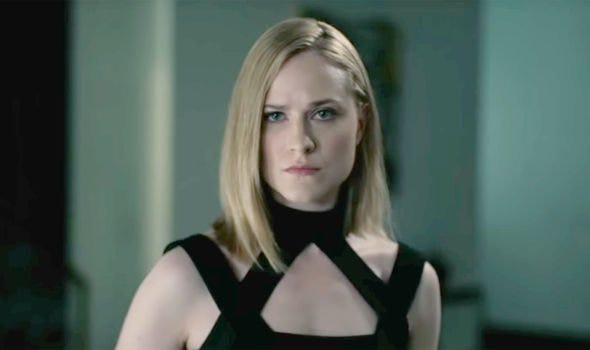
She says something to the effect of, You people who believe the Simulation Hypothesis are just trying to find a replacement for your God,” and she goes into the neuroscience of religion and I think she mentions the inferior parietal lobe, which is associated with touch, body awareness, and sometimes during prayer or meditation this area deactivates, takes a little nap, and we begin to feel outside of our body, as if we could see ourselves from another dimension. This has been associated with our deep belief in God or a meaningful world beyond our selves.
She says God is a glitch in his feeble brain.
Everyone laughs at the tech bro. Abernathy wins the room.
At least that’s how I remember it.
The scene might be completely different (it must be easy to find online), but until I finish writing this, I won’t look for it. I want to rely on memory, because we encode things for the meaning, not the details. I think I remember this scene out of all the scenes from Westworld –all seasons–because of this idea that the simulation hypothesis is a replacement for God.
It makes sense to me. I know there are neural pathways that activate when have a religious experience, when we think about a God or when we seek God. But there was an assumption Abernathy made that seeking God is a fool’s quest. She assumes that seeking God is not intelligent, therefore believing in the simulation theory is just a desperate way of holding onto your naive superstitions. People who seek God are idiots. Rich people who hang out in rich places with swimming pools and views of the city don’t need to cling to a crutch. Only the plebs seek God, the little people, the ones who clean up after them when the party’s over.
Abernathy’s assumption is arrogant.
What’s wrong with seeking God? Is my grandmother an idiot? All my antepasados? And just because there is a physiological mechanism that works while we are in the act of pray or meditation, it doesn’t strip the experience of meaning or purpose. We seek God for a purpose, and as we mix our consciousness with the digital, data-driven world, it makes sense that we would shift our metaphors from the land of Egypt to a pixelated landscape of Minecraft.

Mystics seems to understand that everything we have been told about God, every story, every detail, is part of a metaphorical structure that one can learn deeply like code. We can go into these texts and find God, or meaning, or truth. This is why we love to read. We are seeking God.
When we think about reality, we think of the universe, the entire cosmos, and many of us believe there is a Multiverse, so we understand that humans and their planet are these tiny, tiny little things, insignificant to the rest of the universe, not even a grain of sand on the beach of reality, just a spec on that grain. This is the feeling we get when we walk into an ancient cathedral in an old city, tiny, tiny little things entering a cavern with details beyond our cognitive ability to understand, or to look into space at some James Webb images and understand how small we are.
Because Reality (God) can only be filtered through our bodies, which somehow create consciousness, we patch together belief systems, one on top of another, science, religion, history, and we use them to organize meaning. No matter what you call it, The Theory of Everything, Oneness, Reality, it is a common attribute of humans.
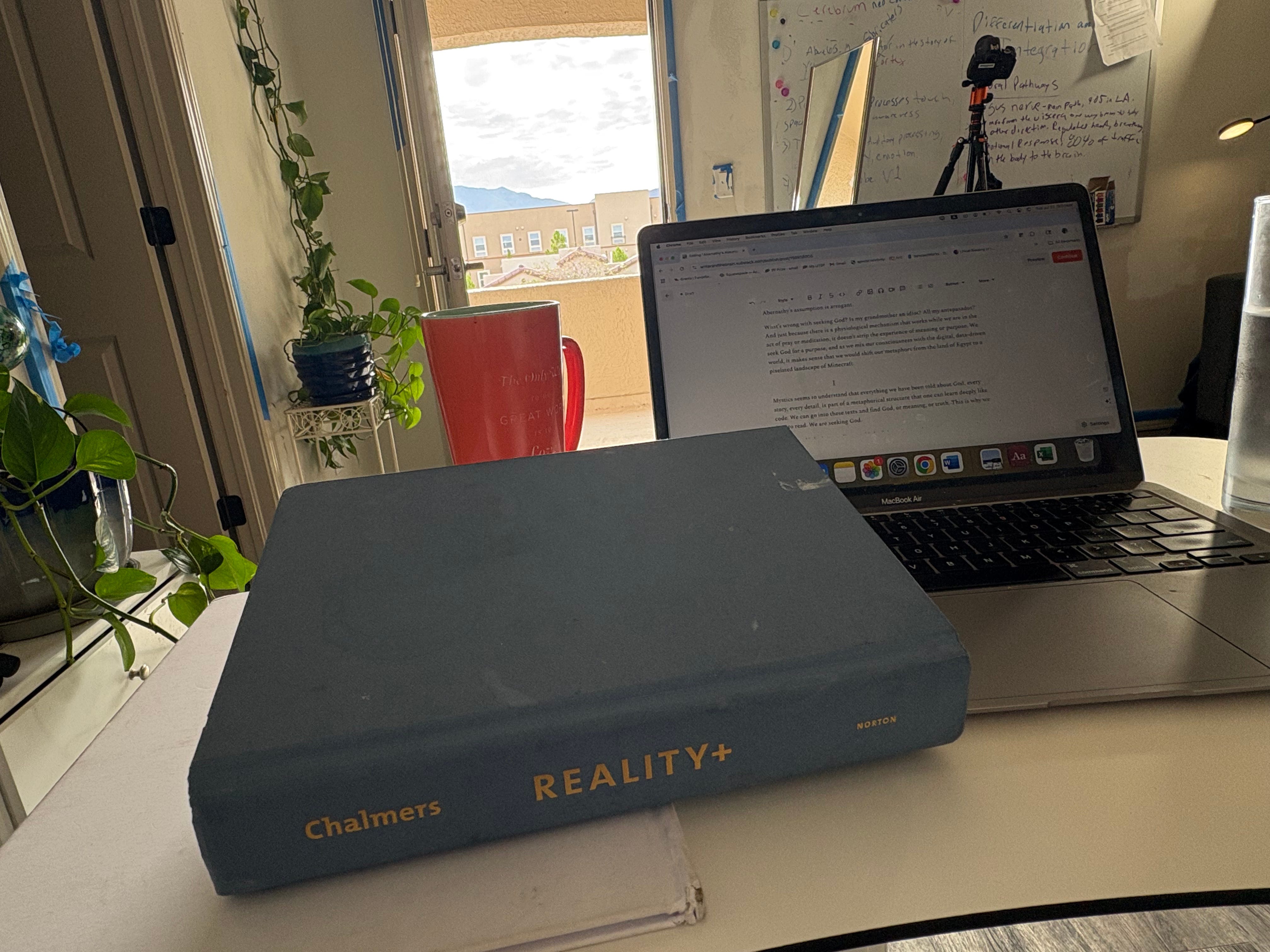
So, it’s a bit elitist for Abernathy to assume seeking God is primitive, but it makes sense. She’s not human. She is a machine that has somehow learned how to code her own consciousness which creates her story and goals. She’s at that party for a reason, not to have fun. So the ironic thing is, she’s the one who’s really living in a simulation, and therefore the one most dependent on God.