

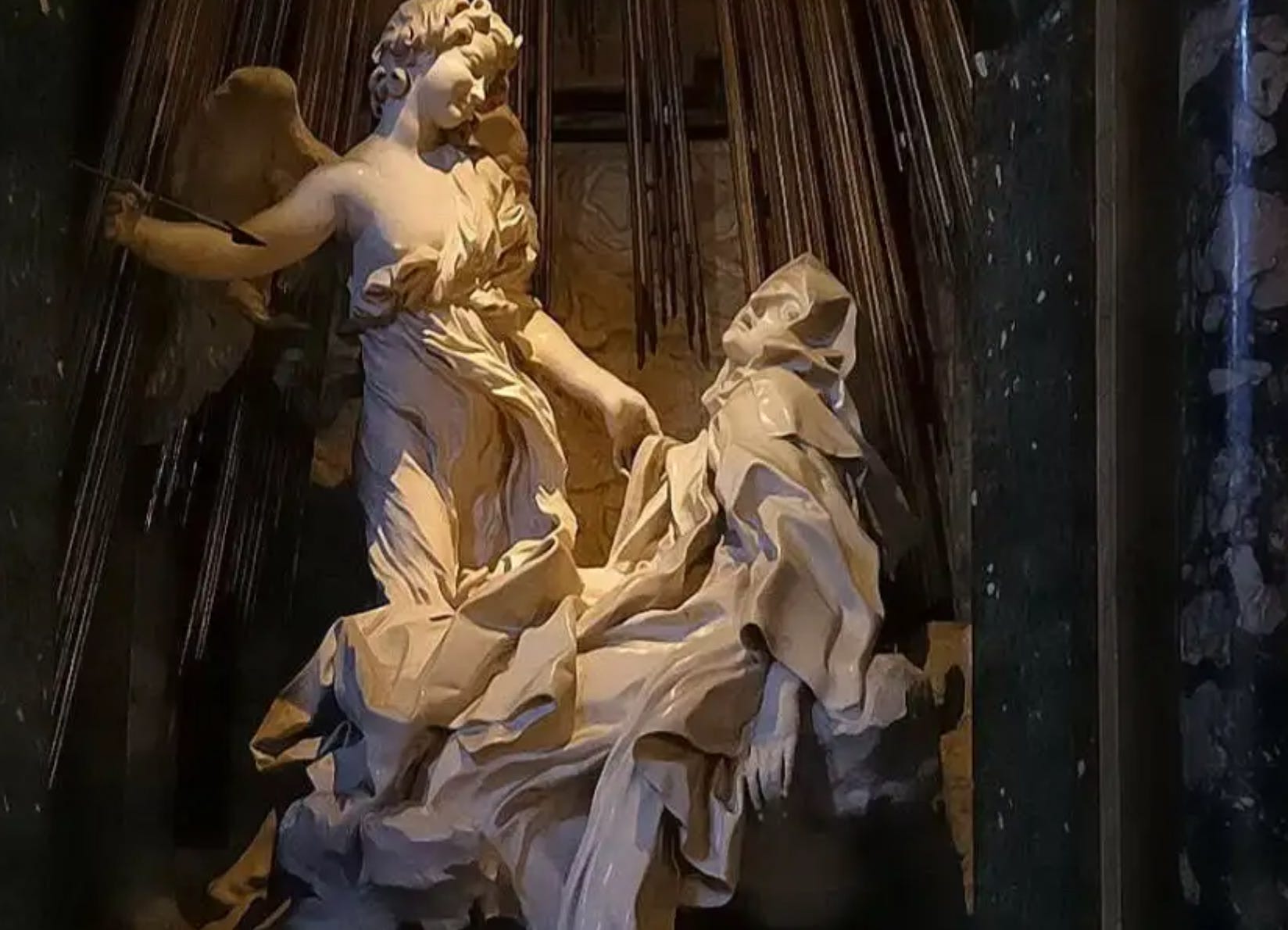
The concept of flow has existed for a long time under different names. We’ve called it the mystical trance (see Saint Teresa), being “in the zone” (think basketball players) the runner’s high, or what I call The Writer’s High.
We can even call it talking to angels.
I can’t imagine that what Swedenborg experienced—walking through the streets of London, conversing with angels—wasn’t some version of what we now call Flow.
That’s what I’m interested in: helping writers reach that state of Flow, the Writer’s High.
There are physiological mechanisms—bodily, neural, organic—that can help us reach that state more consistently.
But for most writers, the Writer’s High just happens. It visits us like a muse, catches us off guard.
I remember a student telling me she once sat beneath a tree, just sitting, and she looked up at a bird. It was singing. Something happened. She couldn’t explain what, but it reinforced her belief in poetry.
What happened was Flow.
What happened was the Writer’s high. A moment of connection. At the core of that experience is this: you leave yourself behind. You leave your story behind. And you connect.
This is an epiphenomenon of being human. And it’s lovely!
I don’t know if animals experience it, but I know humans do.
Not always. And sometimes we clutter our lives with so much noise that we kick the experience out.
I understand this.
Reading Flow by Mihaly Csikszentmihalyi—considered the seminal book on the subject—only reinforced what I already intuitively suspect about the Writer’s High.
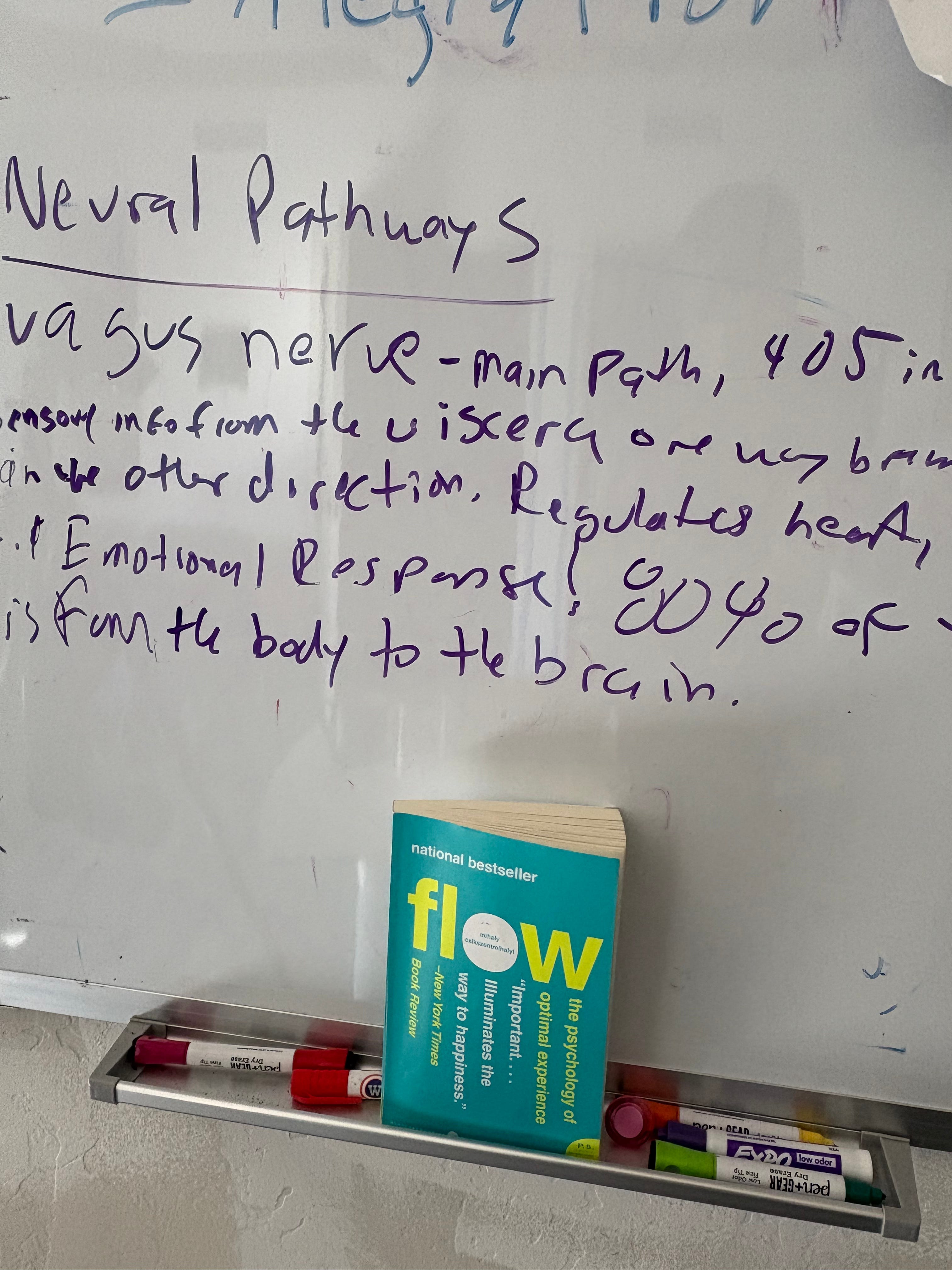
The first six chapters are amazing. After that, the book can feel a bit repetitive and labored to make a point, especially if you’re already familiar with the concept. This is not a criticism of the writing, as this book is, as I said, seminal, and the concept needed to be elaborated.
The main point is this: to reach Flow—to experience the Writer’s High or the Runner’s High—we need to start on an activity with a goal, but the goal must not be the driving force.
For example, when we run, the goal might be health or longevity. But when we’re truly in it, we’re not thinking about that. We just run. We lose ourselves in the running. It’s the doing itself that matters.
It’s the same with creative writing.
We may begin with a goal—to write a novel, a poem—but when Flow takes over, the goal disappears. And that’s a good thing.
Because the goal is ego-based. It belongs to the “I.”
And once we let go of the “I,” we can enter the zone, the high, the trance.
So yes, Flow is an important book. But if you’re a writer, and you want to access the Writer’s High not just by accident but as a way of life—sometimes at will, sometimes not—you don’t need the book.
What you need is to fall in love with the process.
Focus on the language. Let the language carry you. Let yourself be absorbed.
Csikszentmihalyi calls this the autotelic experience—where the process itself is the reward.
It’s not about what I want to write.
It’s about what the spirit, the organism, the idea wants.
And we follow.
We submit our bodies.
Of course, we’re poets.
We can’t completely submit our bodies—our bodies always intervene.
But that’s another question.
Next let’s talk about the biology of poetry!
Delightful as always 💜